The AGI Blind Spot: Why the Next Leap in AI Won't Come from a Server Room, but from the "Laboratory of the Real."
In the current race for AGI, capital has become a commodity. You can buy GPUs, hire elite engineers, and license petabytes of internet text. But there is one strategic asset currently missing from every Silicon Valley balance sheet: Active Cognition Dataset derived from true survival scenarios.
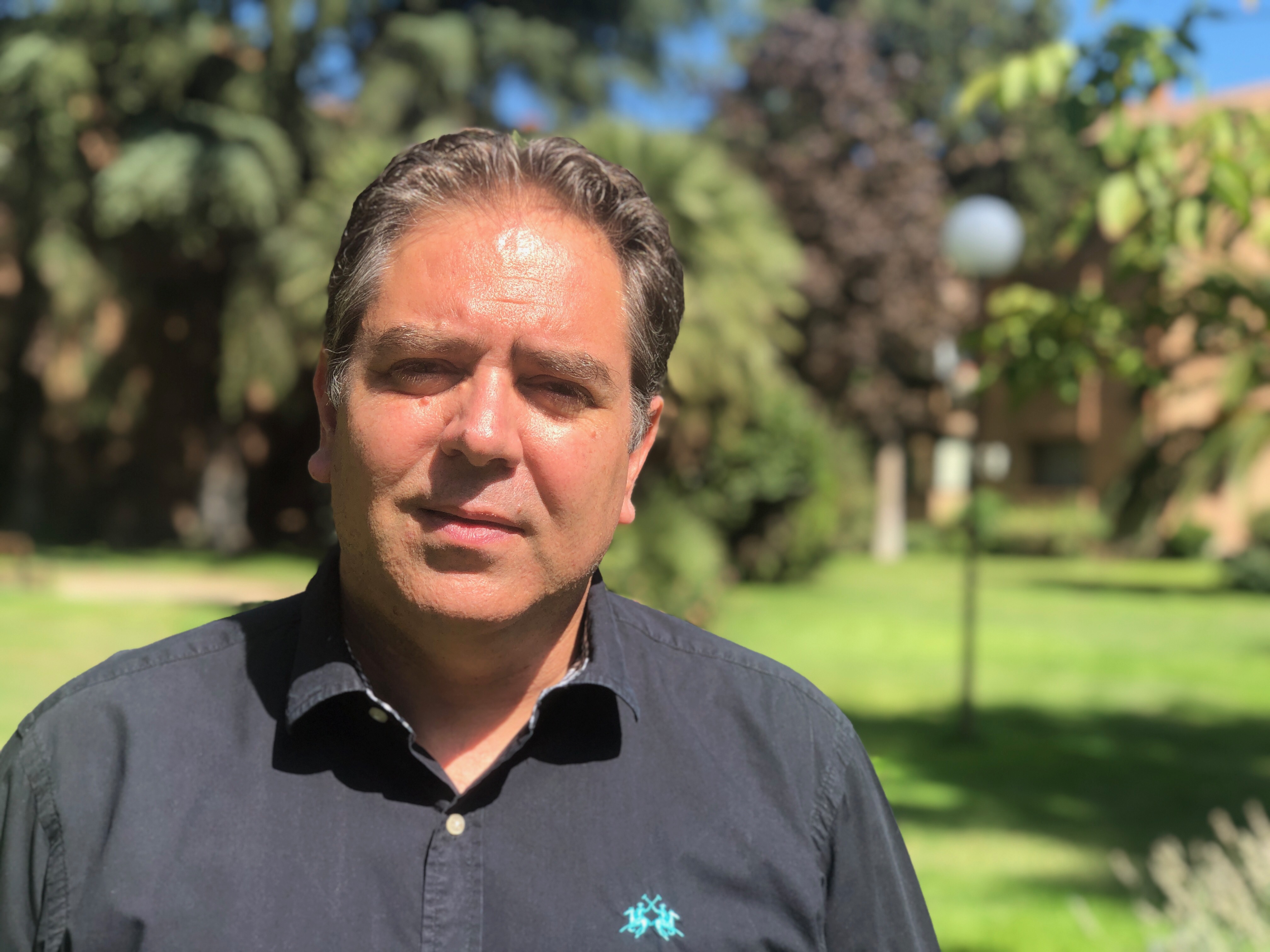
This is the contrarian thesis of Mario Garcés, CEO of The Mindkind.
While the industry focuses on "brute force" computing, Garcés has spent the last 30 years conducting a different kind of R&D. He didn't just live through extreme, high-stakes environments; he treated them as "in vivo" fieldwork. He spent three decades reverse-engineering how the human brain prioritizes survival when statistical prediction fails and chaos reigns—data that cannot be simulated in a lab nor bought with a Series A.
Now, he is turning that proprietary phenomenology into code. The result is ETR: acognitive architecture built not on the products of intelligence (text), but on the mechanics of survival.
We sat down with Mario to understand how he transformed 30 years of intangible life experience into a tangible DeepTech moat, and why he believes the "blind spot" of the AGI industry is biological, not technological.
---
Q: Let's start with the obvious. You're competing in the AGI space against companies with budgets in the tens of billions. What does THE MINDKIND have that they don't?
A: A data source they cannot access. Not because it's expensive — because it physically doesn't exist outside our research.
Look, everyone in the industry operates from the same assumption: that you can reach general intelligence by scaling statistical models, adding more parameters, more training data, more compute. And that's produced spectacular results in certain domains. But there's something none of these models capture: how cognition actually works when a human being is in a real situation — not simulated, not controlled in a lab. The reason is straightforward: you can't put a person in a brain scanner while they're living through something genuinely extreme. Those data simply don't exist in any dataset in the world.
Q: And you have them?
A: I have something different. I have 30 years of systematic phenomenological experience. Real situations — many of them extreme — that I lived firsthand and that I methodologically processed and dissected over decades to extract what we might call the "active principle" common to all of them. A fundamental cognitive mechanism underlying how the human brain actually operates. I then grounded that active principle scientifically, and part of that scientific foundation is published and peer-reviewed.
"We didn't just survive the chaos; we engaged in rigorous phenomenology to extract the underlying mathematical logic of survival. We turned intuition into IP."
Q: You're referring to the paper in Frontiers in Integrative Neuroscience.
A: Exactly. But it's important to understand what that publication is and what it isn't. It's not our main asset. It's the verifiable proof that our asset is real. If we use a pharmaceutical analogy, the paper is like a Phase I clinical trial: it demonstrates the mechanism works. What's protected as a trade secret is the complete formulation — the equivalent of the patented compound that produces the drug.
Q: That's an interesting analogy. Can you develop it?
A: Think about ethnobotany. For decades, the pharmaceutical industry discovered that indigenous communities had empirical knowledge about active compounds in plants that Western science couldn't discover on its own. That knowledge came from centuries of direct experience with their environment — not from laboratories. When scientists isolated the active principle, synthesized it, and validated it, they generated drugs worth billions. No one questions the value of that asset just because "it came from empirical experience rather than a lab." The result — the drug works — is what matters.
What we've done at THE MINDKIND follows the same pattern. The original empirical knowledge is unrepeatable. The scientific foundation is rigorous. And the result — the ETR cognitive architecture — is verifiable.
Q: Let's talk about ETR. What makes it technically different?
A: ETR is a neural-graph architecture that produces traceable, explainable reasoning. In current LLM-based systems, you have a black box: a question goes in, an answer comes out, and nobody — not even the creators themselves — can tell you exactly why the system reached that conclusion. ETR operates differently. Every step of the reasoning is traceable, auditable. You can follow the path the system took to reach its conclusion.
This isn't a nice-to-have. In the sectors where we intend to operate — autonomous systems, medical diagnostics, defense, critical infrastructure — explainability isn't optional. It's a regulatory requirement and, frankly, an ethical one. You can't deploy an AI system that makes decisions about people's lives and say "I don't know why it decided that."
Q: The major players are also working on explainability.
Yes, but they're trying to add it after the fact to an architecture that is opaque by design. It's like trying to make a combustion engine transparent. You can add sensors, you can monitor emissions, but the internal process is what it is. We're not adding explainability. The ETR architecture *is* explainable by design, because it's built on a model of how cognition actually works — not on statistical correlations.
Q: Let's get to the question any investor would ask: what's your moat? What prevents someone with more resources from replicating what you've done?
Three things.
First, unreplicable temporal depth. Thirty years of systematic phenomenological research can't be compressed. There's no shortcut. It can't be accelerated with capital. You can hire 10,000 engineers tomorrow, but you can't buy three decades of first-person empirical data that no longer exist anywhere else.
Second, a methodological barrier. It's not that replicating our research would be expensive. It's that current neuroscience doesn't have the tools to obtain data on human cognition under real extreme conditions. This isn't a financial limitation. It's a physical limitation of the current state of science. We didn't obtain that knowledge with instruments. We obtained it with life.
Third, legal protection. What hasn't been published is protected as an industrial trade secret under Spanish and European law. This isn't a patent you can read and work around. It's knowledge that simply isn't available.
Q: Some would argue that a competitive advantage based on a founder's personal experience is fragile. What happens if you get hit by a bus tomorrow?
It's a fair question, and the answer has two parts. First: that knowledge is no longer just in my head. It's encoded in the ETR architecture, it's documented internally, and it's being developed by a world-class technical and scientific team. Víctor Simic as CTO, Eduardo García-Rico and Lara López as CSOs, Julián Alonso as CIO. The foundational knowledge has already been transferred to the product and the team.
The second part is more subtle: the fact that the original knowledge is unrepeatable doesn't mean its application depends on a single person. Once you have the drug formula, you don't need the ethnobotanist on the factory floor every day. What you need is the team that knows how to produce it, scale it, and bring it to market. And that's exactly what we have.
Q: Where is the technology today?
We're in advanced development. We have 15 years of cumulative R&D investment. The architecture exists, it works, and it produces verifiable results. We're now at the stage where we need to scale — and that's where funding comes in.
Q: What are you looking for in an investor?
Someone who understands that the race to AGI won't be won by whoever has the most GPUs, but by whoever has the right cognitive model. There's a phrase I repeat often internally: everyone is trying to build intelligence by looking at data from outside the brain. We have the map of what happens inside. And that map isn't for sale because it can't be manufactured. What we're looking for is a partner who sees the value in that and wants to be at the table when we prove we were right.
Q: And if you're not?
Then we'll have lost a bet. But look at what the other side is betting: hundreds of billions of dollars on scaling an approach that, after a decade of massive investment, still doesn't produce genuine reasoning, still isn't explainable, and still fails in ways no human brain would fail. We're betting on understanding how intelligence works first, and then building it. They're betting on building something and hoping it eventually behaves like intelligence. Time will tell who bet better. But if I were an investor, I'd diversify.
---
THE MINDKIND S.L. is headquartered in Castejón de Sos, Huesca, Spain.
The scientific publication referenced in this interview is available at [Frontiers in Integrative Neuroscience](https://www.frontiersin.org/journals/integrative-neuroscience/articles/10.3389/fnint.2019.00011/full).